
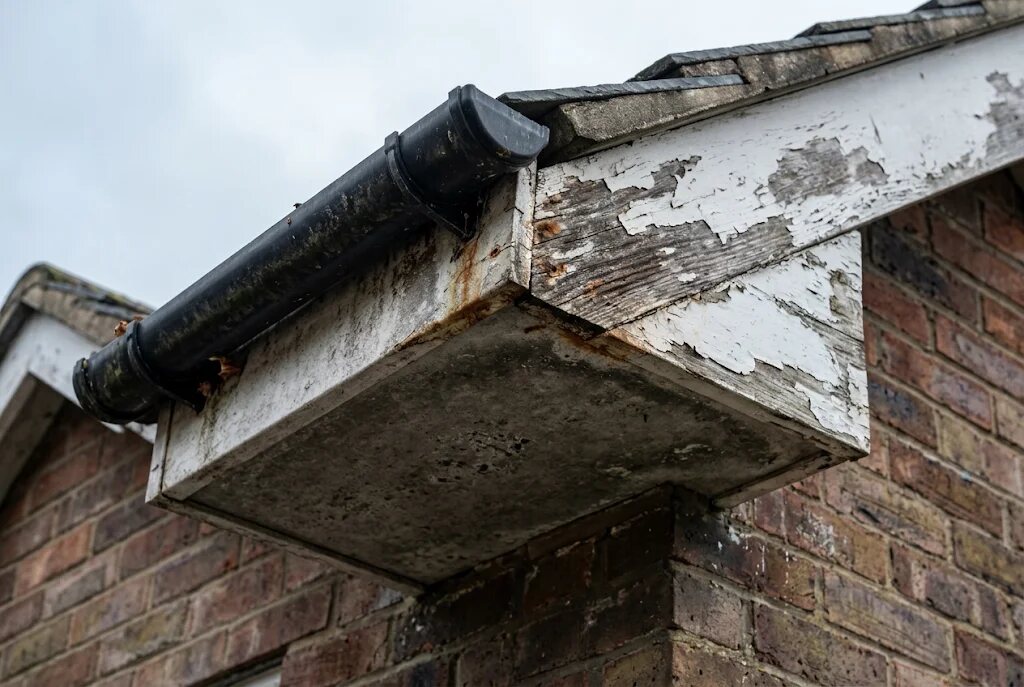
Where boards are found
Under the eaves as soffits, around bay and porch roofs, as panels behind boilers and fireplaces, as linings in garages and sheds, and as partition boards in older commercial buildings. Houses built or altered between 1950 and 1990 are the most likely.
Why testing matters first
Drilling a soffit for a new light, cutting a board for a boiler flue or replacing fascias can all disturb these materials. Asbestos insulating board is more fragile and higher risk than cement, and can need a licensed contractor, so knowing which you have matters.
Telling the trades
Once you have a result, give it to the roofer, electrician or builder. A written note listing which boards are affected is enough to prevent most accidental disturbance.
Who does the work, and what the law expects
Kilnbrook Asbestos Surveys is an introduction service. We pass your details to an independent contractor, who provides the quote, takes the samples or carries out the survey, and holds the insurance and any competence they need. Samples are analysed by a laboratory and the result is issued in writing. Taking samples or surveying a building is work with real exposure risk, so it should be done by trained people with dust controls, and the sample should be bagged, sealed and labelled correctly.
What to send us
- Two or three clear photos of the material and where it is
- The room, roof or area, and roughly how much of it
- The age of the building if you know it
- What work is planned, and when, if any
- Whether the building is occupied or in use
Prices on this site are guides only. Only the contractor's written quote counts.
How it works.
- 1
Send details and photos
Say what the material is, where it is and the age of the building. Clear photos help.
- 2
Contractor replies
An independent local contractor reviews your enquiry and confirms in writing what they can sample and what it would involve.
- 3
Sample taken
A small sample is taken with controls to limit dust, sealed and labelled.
- 4
Laboratory result
The sample is analysed and you receive a written result you can show to builders.
What affects the price.
- Number of boards or elevations
- Height and need for scaffold or ladder access
- Whether the board is cement or insulating board
- Result turnaround wanted
- Whether the work that prompted the test is urgent
Good to know.
Are all grey boards asbestos?
No. Many are modern fibre cement or calcium silicate. A laboratory test is the only way to be sure.
Can I replace my fascias myself?
If they are asbestos, no. Test first and speak to a contractor about the right route.
What is insulating board?
A softer, more fragile asbestos board, used for fire protection. It is higher risk and may need licensed work.
Can boards be overclad?
Sometimes. The contractor can advise if overcladding is suitable for your building.
Do you do the testing yourselves?
No. We are an introduction service. We pass your details and photos to an independent local contractor, who provides the quote, takes the samples and arranges the laboratory analysis.
What should I send?
Two or three clear photos, what the material is and where it is, the age of the building if you know it, and a postcode. A phone photo is fine.
Can I take a sample myself?
It is not recommended. Cutting, scraping or drilling can release fibres. Leave the material alone and have a trained person take the sample.
Where we cover.
Stoke-on-Trent, its neighbourhoods and the towns and villages around it.
Tell us what needs testing.
A local contractor reviews your details and photos, then replies with a written quote for sampling or a survey. Free to ask, no obligation.
Prefer to talk?
01782 000 000